Ideas about wooden kitchen cabinets continue to attract homeowners who want to bring natural warmth, authentic texture, and lasting character into their kitchens. While painted cabinets remain popular throughout the United States, wood cabinetry has a unique ability to make a kitchen feel welcoming and connected to the rest of the home. From light natural finishes to deeper, richer wood tones, wooden cabinets can support modern, transitional, farmhouse, and traditional interiors when they are selected thoughtfully.
The appeal of wood extends beyond appearance. Wood grain introduces natural variation that gives cabinet doors depth and individuality, while the right construction and finish can provide the durability required for a busy household. However, designing with wooden cabinetry requires balance. Wood species, stain color, door style, flooring, countertops, and lighting must work together so the kitchen feels intentional rather than visually heavy.
Cabinets House helps homeowners approach cabinet selection as both a design and functional decision. Instead of choosing wood solely because of a sample’s appearance, it is important to consider how the material will look across an entire kitchen and how it will coordinate with other permanent surfaces. The objective is to create a kitchen that feels attractive today while remaining practical and relevant for years.
This guide explores wooden kitchen cabinet ideas, popular design combinations, practical considerations, and ways to incorporate the warmth of wood into kitchens of different sizes and styles.
Why wooden kitchen cabinets remain timeless
Wood has been used in furniture and cabinetry for generations, and its continued popularity is closely connected to its natural character. Unlike completely uniform painted surfaces, wood introduces variations in grain, tone, and texture that make a kitchen feel more organic.
Another advantage is design versatility. Depending on the door profile and finish, wooden cabinets can look traditional or distinctly contemporary. A detailed raised panel door with a rich stain may suit a classic interior, while a simple shaker or flat panel door in a light wood tone can create an entirely different modern aesthetic.
Wood also coordinates naturally with many common kitchen materials. Stone countertops, ceramic tile, metal hardware, glass, and painted surfaces can all complement wood cabinetry when colors and undertones are carefully selected.
The key to timeless design is restraint. Instead of filling the kitchen with competing wood tones and decorative details, homeowners can allow the natural cabinetry to become the primary source of warmth and texture.
Explore light wood cabinets for a brighter kitchen
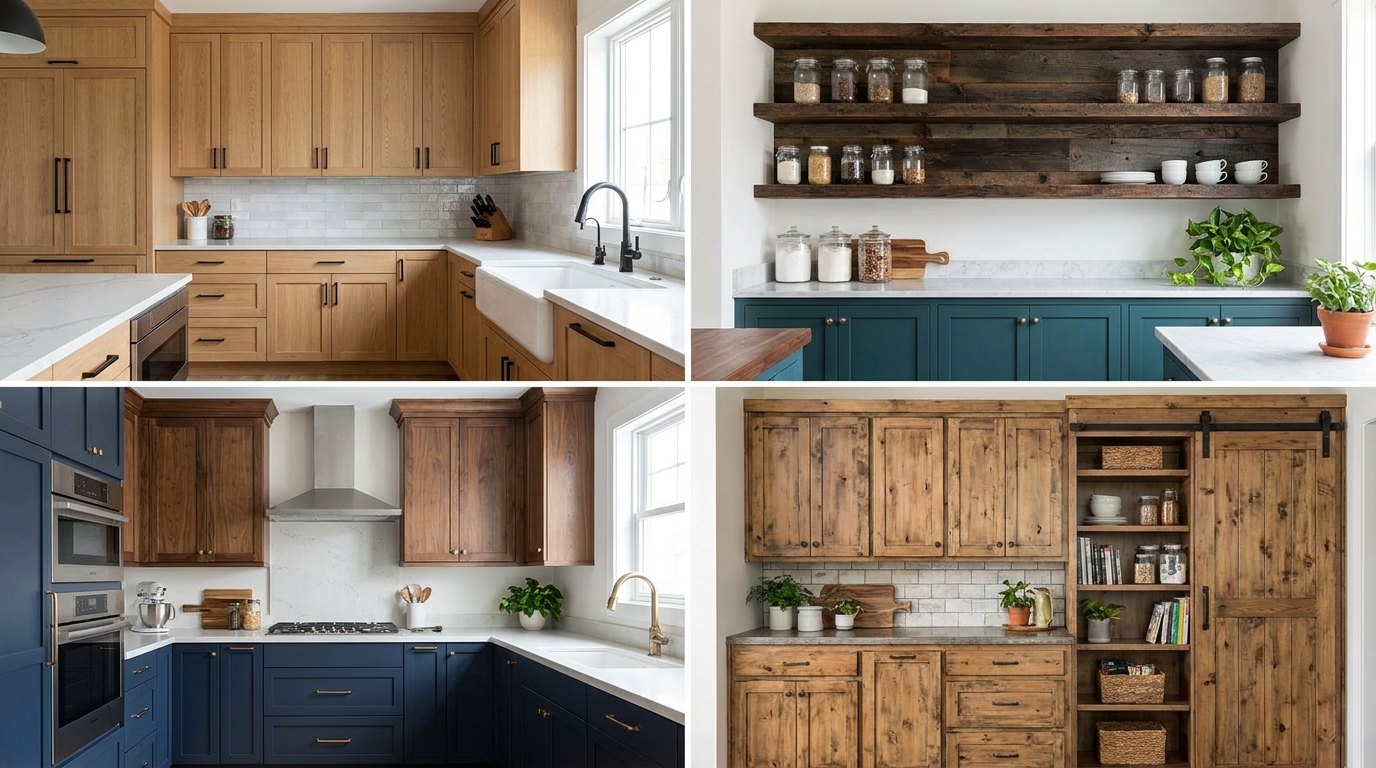
Light wood cabinetry has become an important option for homeowners who want the warmth of natural materials without making the kitchen feel dark. Oak inspired tones and other pale wood finishes can create a relaxed, airy atmosphere while still showcasing visible grain.
This approach works particularly well in kitchens with limited natural light. Light cabinetry does not absorb visual space as aggressively as very dark finishes, helping compact rooms maintain a sense of openness.
In contemporary kitchens, light wood cabinets can be paired with simple door profiles, understated hardware, and clean countertop edges. This keeps the design streamlined while allowing the natural texture to provide visual interest.
Light wood also works beautifully alongside warm white surfaces. A white or lightly veined countertop can create gentle contrast while maintaining an inviting overall palette.
Useful combinations for light wood cabinetry include:
- Warm white quartz countertops
- Soft neutral backsplashes
- Matte black hardware for contrast
- Brushed metal fixtures
- Light stone flooring
- Simple shaker or flat panel doors
These combinations can create a kitchen that feels current without becoming overly dependent on short term trends.
Use darker wood tones to create depth and sophistication
Dark wood cabinets can introduce richness and architectural presence into a kitchen. Walnut inspired finishes and deep brown stains are particularly effective in larger rooms where stronger colors can be balanced with adequate lighting.
The most important consideration with dark wood is contrast. When cabinets, countertops, flooring, and walls are all dark, the kitchen can quickly feel smaller and heavier. Introducing lighter surfaces helps define individual elements and maintain visual balance.
For example, dark wooden base cabinets can be paired with light countertops and a softly colored backsplash. Reflective lighting and warm metallic hardware can further enhance the depth of the wood without overwhelming the space.
Dark wood can also be used selectively. Instead of installing it throughout the entire kitchen, homeowners may choose a wooden island, pantry wall, or beverage station as an accent.
The table below illustrates several approaches to wooden cabinet design.
| Wood Direction |
Visual Effect |
Ideal Pairing |
Best Application |
| Light Natural Wood |
Bright and organic |
Warm white surfaces |
Small or modern kitchens |
| Medium Wood Tone |
Warm and balanced |
Neutral stone |
Transitional kitchens |
| Dark Wood |
Rich and sophisticated |
Light countertops |
Larger kitchens |
| Wood Accent Cabinets |
Adds texture |
Painted perimeter cabinets |
Two tone designs |
The right balance allows natural wood to add character without dominating the entire room.
Combine wood and painted cabinets
One of the most effective ways to incorporate wooden cabinetry is through a mixed finish kitchen. Combining natural wood with painted cabinets creates contrast and prevents either material from becoming visually overwhelming.
A popular approach is to use painted cabinets around the perimeter and introduce wood on the kitchen island. The island then becomes a natural focal point while the lighter surrounding cabinetry maintains brightness.
The opposite approach can also work. Natural wood perimeter cabinets can be paired with a painted island in a complementary neutral or darker accent color.
Homeowners considering Forevermark Cabinets can explore complementary cabinet styles and finishes when building a coordinated kitchen concept. The objective should be to create a relationship between materials rather than treating each cabinet section as a separate design statement.
Successful mixed cabinet designs usually repeat colors elsewhere in the room. For example, the tone of a wooden island might appear again in flooring, open shelving, seating, or decorative details.
Select the right door style for wooden cabinets & Wooden Kitchen Cabinet Ideas
The cabinet door profile can dramatically change the personality of natural wood. The same wood tone can look traditional, transitional, or contemporary depending on how the door is designed.
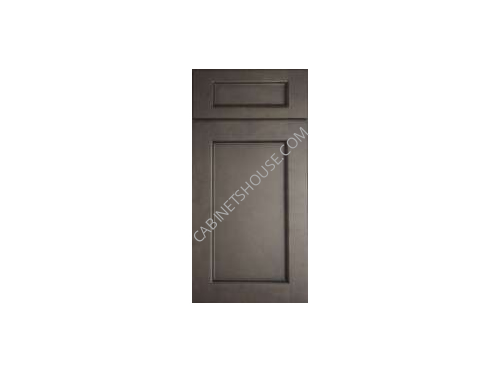
Shaker doors remain an excellent choice because their simple frame provides enough detail to showcase craftsmanship without competing excessively with the wood grain. This versatility allows shaker cabinetry to adapt to many American home styles.
Flat panel doors provide a cleaner alternative. Because there are fewer decorative details, the grain itself becomes the primary visual feature. This approach works particularly well in contemporary and organic modern kitchens.
More detailed door profiles can create a traditional appearance, especially when combined with deeper stains, decorative molding, and classic hardware.
Before choosing a door style, homeowners should consider the architecture of the house. Cabinetry that complements the broader character of the home often feels more timeless than cabinetry selected according to a single temporary trend.
Coordinate wooden cabinets with countertops and flooring
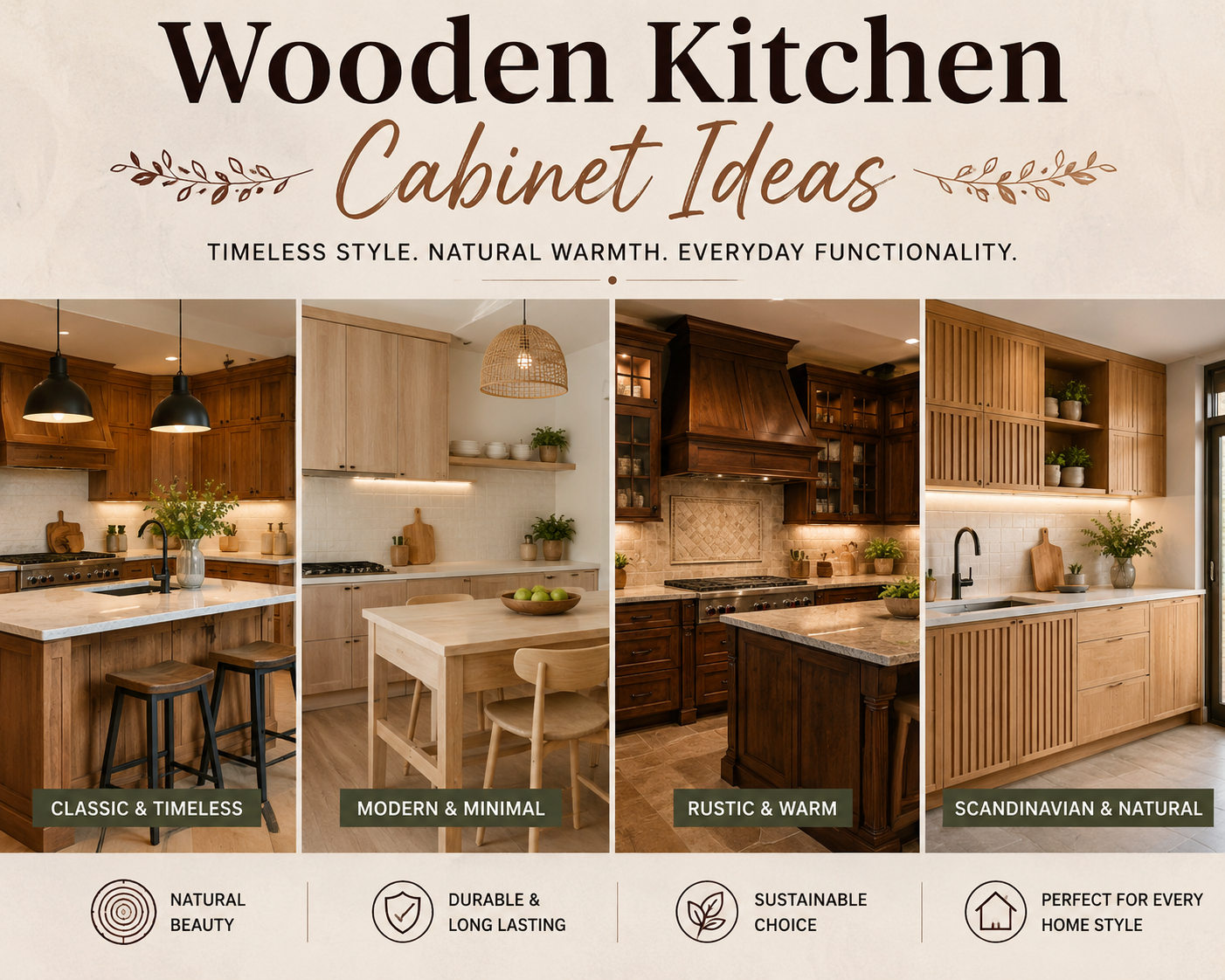
Wooden cabinetry introduces natural undertones that must be considered when selecting other permanent materials. Ignoring these undertones is one of the easiest ways to create a kitchen where individual elements look attractive separately but feel disconnected when installed together.
Warm woods often coordinate well with creamy whites, beige based stones, and countertops featuring subtle warm veining. Cooler or neutral wood tones may work effectively with crisp whites and softer grey surfaces.
Flooring requires particular attention. Installing wood cabinets directly above wood flooring can create a beautiful result, but the two materials should not appear accidentally mismatched. They do not necessarily need to be identical, but there should be enough contrast or tonal harmony to distinguish them intentionally.
Cabinets House recommends evaluating cabinet, countertop, and flooring samples together under the actual lighting conditions of the home whenever possible. Artificial showroom lighting can significantly alter the appearance of wood and paint undertones.
A coordinated material palette creates a more polished result and reduces the risk of expensive design changes later.
Make wooden cabinetry work in small kitchens
Homeowners sometimes avoid wooden cabinets in small kitchens because they worry the material will make the room feel darker. However, careful design choices can allow wood cabinetry to work beautifully in compact spaces.
Lighter wood finishes are an obvious solution, but layout and lighting are equally important. Under cabinet lighting can brighten work surfaces, while a reflective backsplash can distribute light throughout the room.
Limiting unnecessary decorative details also helps. Clean door profiles and simple hardware prevent the natural grain from competing with excessive visual elements.
Glass front upper cabinets or carefully placed open shelving can break up large sections of solid cabinetry. This creates visual breathing room while preserving useful storage.
In a small kitchen, the goal is not necessarily to minimize cabinetry. Instead, homeowners should maximize storage while controlling visual weight through color, lighting, and proportion.
Consider durability and maintenance before buying
Wooden kitchen cabinets require appropriate care to preserve their appearance. Kitchens naturally expose cabinetry to moisture, grease, temperature changes, and frequent physical contact.
Regular cleaning should generally involve gentle methods. A soft cloth and appropriate mild cleaner can remove everyday residue without damaging the finish. Excess moisture should be wiped away rather than allowed to remain around cabinet joints and edges.
Direct exposure to intense sunlight may also influence some wood finishes over time. Window treatments and thoughtful kitchen planning can help manage prolonged UV exposure where necessary.
When comparing wooden cabinetry, homeowners should evaluate more than the visible door. Construction quality, finish durability, hinges, drawer systems, and cabinet box materials all contribute to long term performance.
Forevermark Cabinets are among the options homeowners may consider when seeking a balance between attractive styling, functional construction, and accessible pricing for a kitchen remodeling project.
Add natural wood through smaller cabinet features
A homeowner does not need an entirely wood finished kitchen to benefit from the material’s warmth. Smaller applications can create meaningful visual impact.
Open wooden shelves can soften a painted kitchen while providing space for frequently used dishes or carefully selected decorative objects. A wood finished island can serve as a centerpiece, while a dedicated pantry section can introduce material contrast.
Other ideas include:
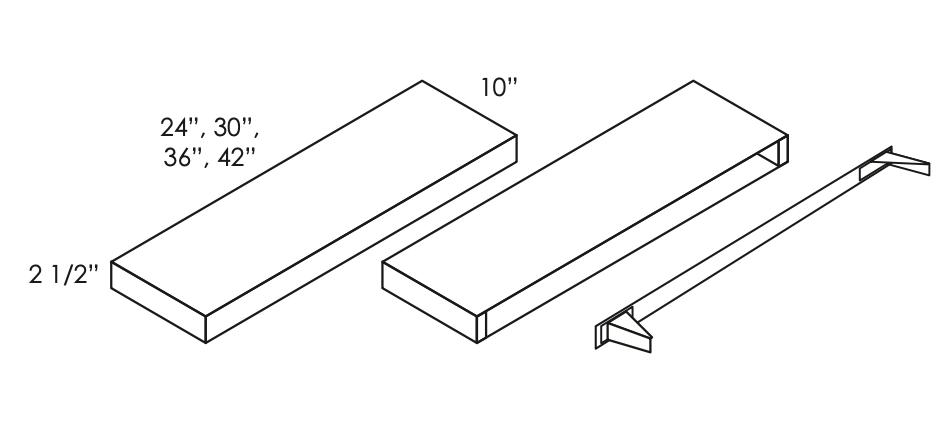
- Natural wood floating shelves
- Wood finished kitchen islands
- Contrasting pantry cabinetry
- Glass doors with wood frames
- Decorative wood panels
- Coordinated interior cabinet details
These applications are particularly useful for homeowners who appreciate wood but still prefer painted cabinetry as the dominant design.
The strongest designs usually have a clear hierarchy. One material should lead the composition while secondary finishes provide contrast and support.
Balance design trends with long term value
Natural materials frequently move in and out of the spotlight, but wood itself has never truly disappeared from kitchen design. What changes are the preferred tones, door profiles, and ways the material is incorporated.
For long term value, homeowners should be cautious about selecting highly unusual stains solely because they are temporarily fashionable. Natural looking finishes and balanced medium tones generally provide greater flexibility when updating other parts of the kitchen later.
Hardware can be replaced relatively easily. Lighting, wall paint, and decorative accessories can also change as personal preferences evolve. Cabinetry is a more substantial investment, so its design should ideally provide a stable foundation.
This does not mean every kitchen must look conservative. Personality can be introduced through thoughtful combinations of wood, color, texture, and architectural details while maintaining a cabinet style that has lasting appeal.
A well planned wooden kitchen should feel connected to the home rather than to a particular year or temporary design movement.
Why Cabinets House can help with your cabinet selection
Choosing wooden cabinetry involves several interconnected decisions. Wood tone, door style, layout, storage configuration, countertops, and flooring all influence the final result.
Cabinets House helps homeowners evaluate these elements together rather than making isolated product decisions. This approach can simplify the selection process and help create a more cohesive kitchen.
Whether the project calls for a complete natural wood look, a mixed cabinet design, or strategically placed wood accents, careful planning is essential for achieving a balanced result.
Quality products, accurate measurements, and thoughtful material coordination provide the foundation for a kitchen that remains functional and visually appealing for many years.
Conclusion: Wooden Kitchen Cabinet Ideas
Ideas about wooden kitchen cabinets offer homeowners countless opportunities to create warm, distinctive, and timeless interiors. From bright natural wood tones to sophisticated darker finishes, wooden cabinetry can adapt to a wide variety of kitchen styles and architectural environments.
The best results come from balancing wood tone with room size, lighting, countertops, flooring, and cabinet door design. Homeowners can choose full wood kitchens, combine natural and painted cabinetry, or introduce wood selectively through islands and accent features.
For homeowners throughout the United States, wooden kitchen cabinets remain a compelling choice for creating spaces with genuine warmth and character. With thoughtful planning, quality cabinetry, and guidance from Cabinets House, it is possible to design a kitchen that celebrates the natural beauty of wood while delivering the functionality required for modern everyday living.

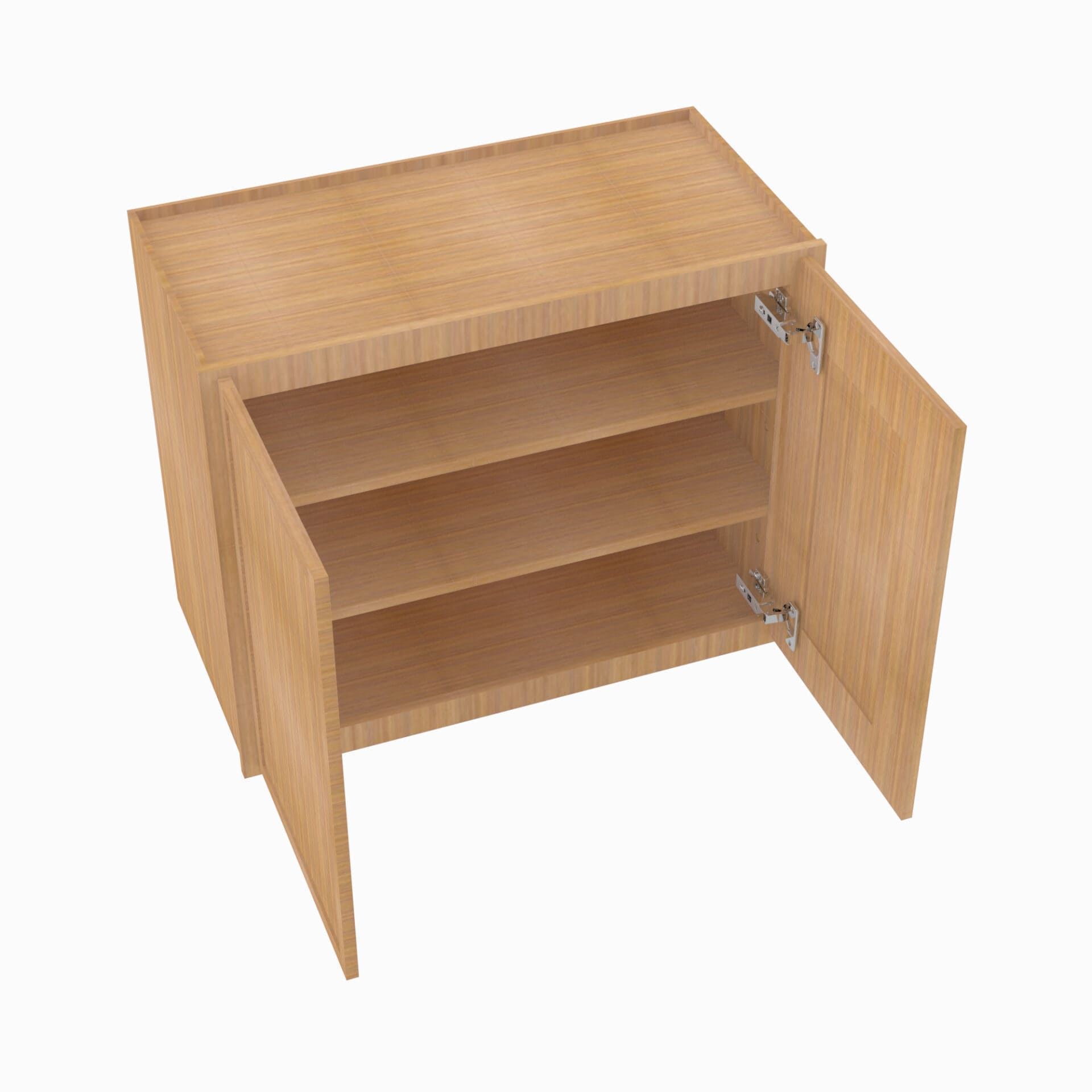
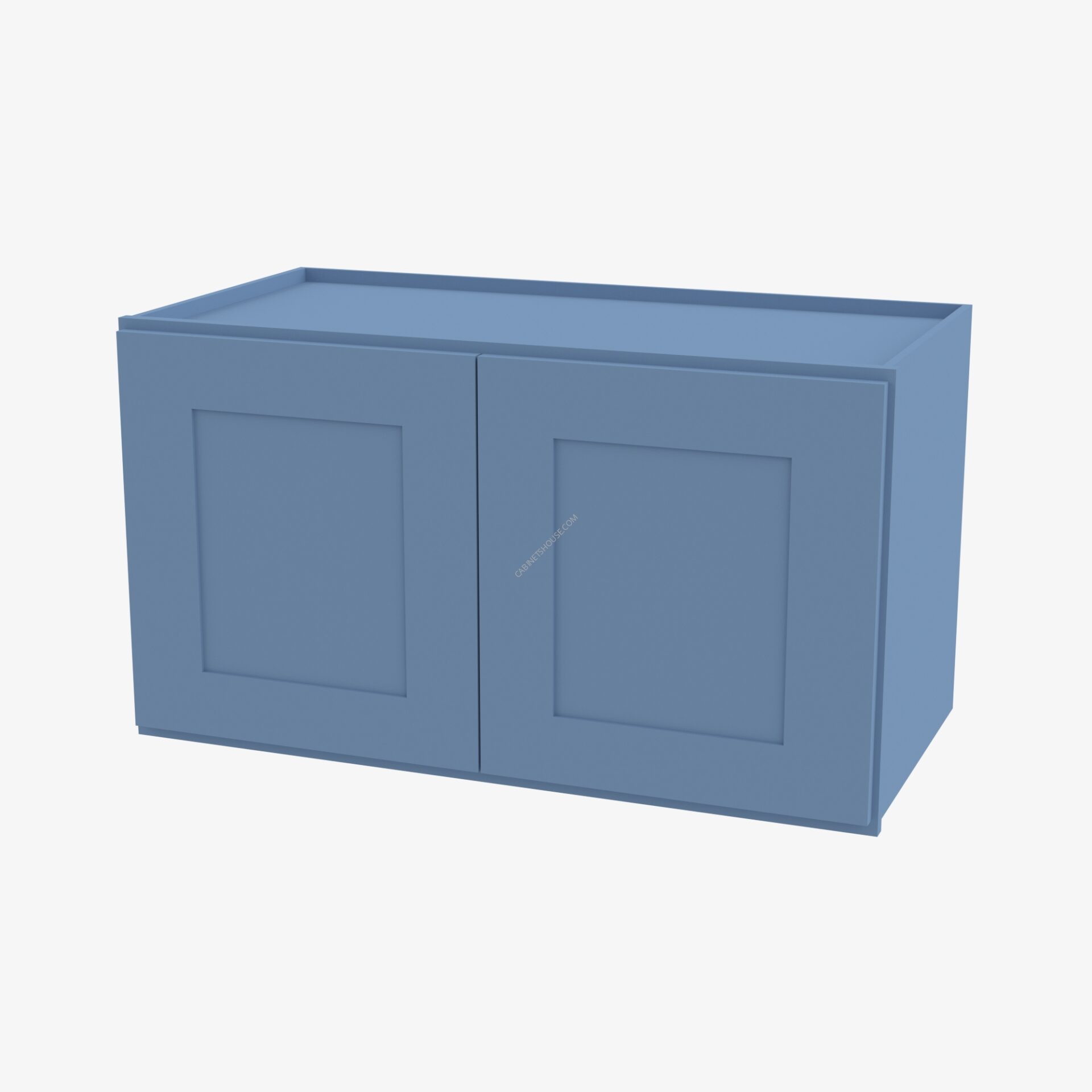 Double Door Wall Cabinet AX-W3324B Forevermark Xterra Blue Shaker
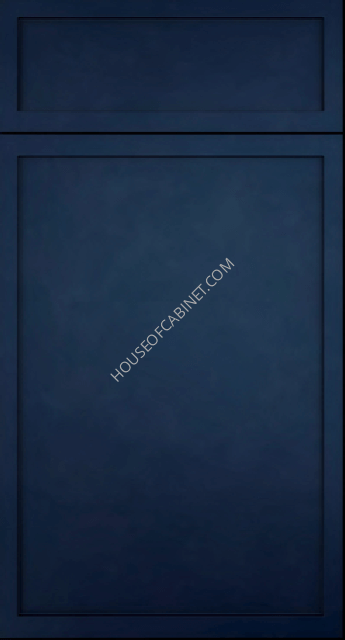 Drawer Pack Base Cabinet PD-DB12-3 Forevermark Petit Blue
 Wall Glass Door with No Mullion and with Clear Glass PS-W3642BGD Forevermark Petit Sand