Kitchen cleaning: natural ways of cleaning your kitchen is becoming increasingly popular among homeowners who want a healthier, safer, and more environmentally friendly home. The kitchen is one of the busiest rooms in any house, serving as the place where meals are prepared, families gather, and everyday routines begin and end. Because of its constant use, grease, food residue, moisture, and bacteria can quickly accumulate on countertops, cabinets, sinks, and appliances. Keeping the kitchen clean is essential not only for appearance but also for maintaining a hygienic environment.
Many commercial cleaning products contain harsh chemicals that may leave behind strong odors or residues on surfaces used for food preparation. While these products can be effective, more homeowners across the United States are choosing natural cleaning methods that are safer for children, pets, and the environment. Natural ingredients such as vinegar, baking soda, lemons, and warm water can handle many common cleaning tasks while reducing unnecessary chemical exposure.
Cabinets House understands that protecting your cabinetry is just as important as keeping your kitchen clean. Beautiful kitchen cabinets are an investment, and using appropriate cleaning methods helps preserve their finish, color, and durability for years. Proper maintenance not only improves appearance but also extends the lifespan of your entire kitchen.
This guide explains practical and effective natural cleaning methods that help maintain a spotless kitchen while protecting cabinets, countertops, appliances, and other important surfaces.
Why natural kitchen cleaning is becoming more popular
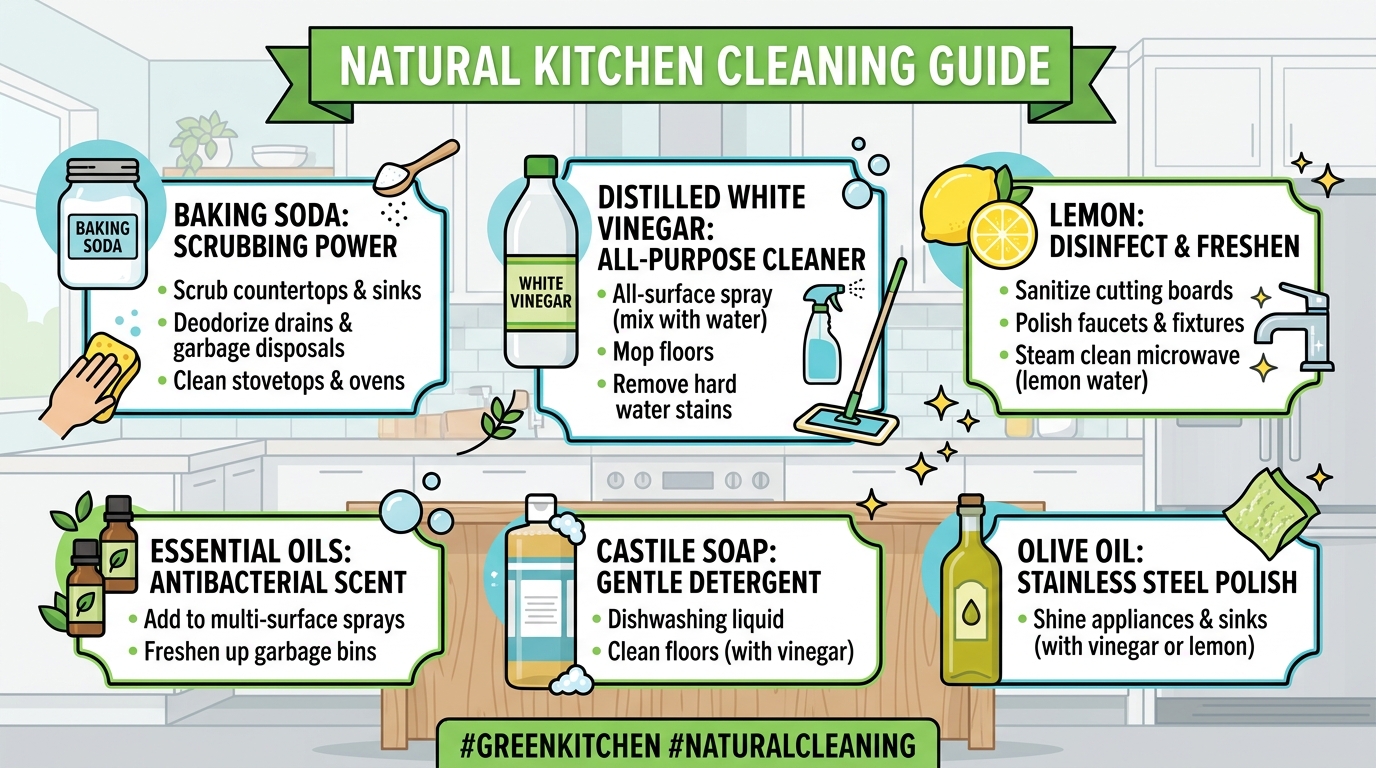
Natural cleaning methods have gained popularity because they combine effectiveness with simplicity. Many of the ingredients needed for daily kitchen cleaning are already available in most homes, making them both economical and convenient.
Another advantage is safety. Natural cleaning solutions generally produce fewer harsh fumes and are less likely to irritate skin or respiratory systems. Families with young children and pets often appreciate this additional peace of mind.
Environmental responsibility is another reason homeowners are changing their cleaning habits. Using biodegradable ingredients reduces the number of synthetic chemicals entering household wastewater systems.
Natural cleaning also helps protect many kitchen materials. Certain commercial cleaners can gradually damage painted cabinets, wood finishes, and natural stone surfaces if used improperly. Gentle natural alternatives reduce this risk while still providing excellent cleaning performance.
Keep kitchen cabinets clean without damaging the finish
Kitchen cabinets are exposed to grease, fingerprints, steam, and cooking residue every day. Over time, these contaminants can dull cabinet finishes and reduce their visual appeal if they are not removed properly.
The safest approach is to use a soft microfiber cloth with warm water and a small amount of mild dish soap. This combination removes everyday dirt without harming painted or stained cabinet finishes.
For areas with heavier grease buildup, a mixture of warm water and white vinegar can help loosen residue. The solution should be applied to the cloth rather than sprayed directly onto the cabinet surface to prevent excess moisture from reaching joints or seams.
After cleaning, always dry cabinets immediately using a clean microfiber towel. Allowing water to remain on cabinet surfaces for long periods may gradually affect certain finishes.
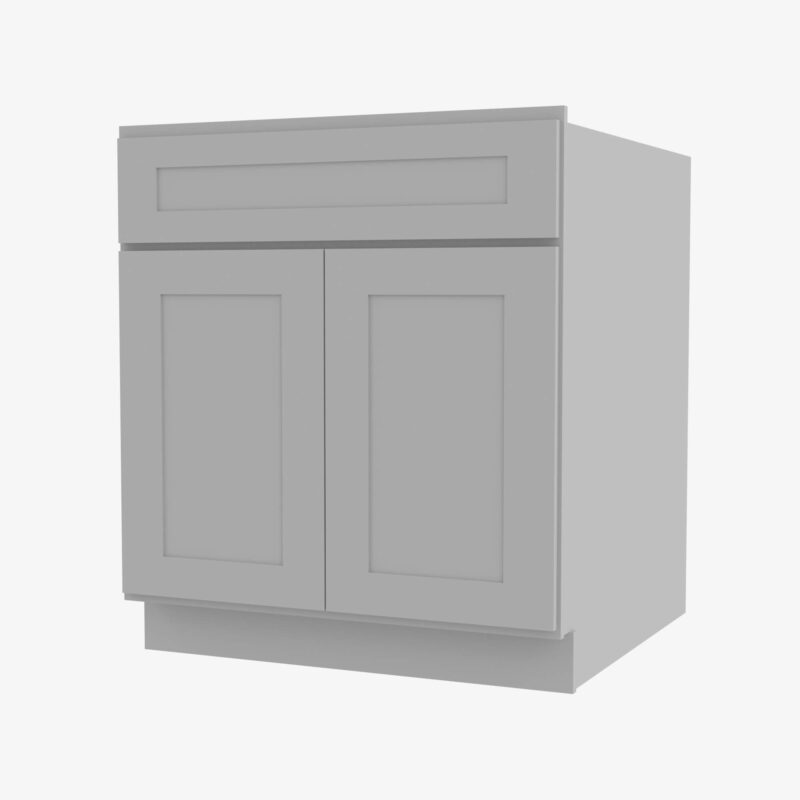
Forevermark Cabinets are designed to withstand everyday kitchen use, but regular gentle cleaning helps preserve their appearance and maintain their original finish over time.
Natural ingredients that work surprisingly well
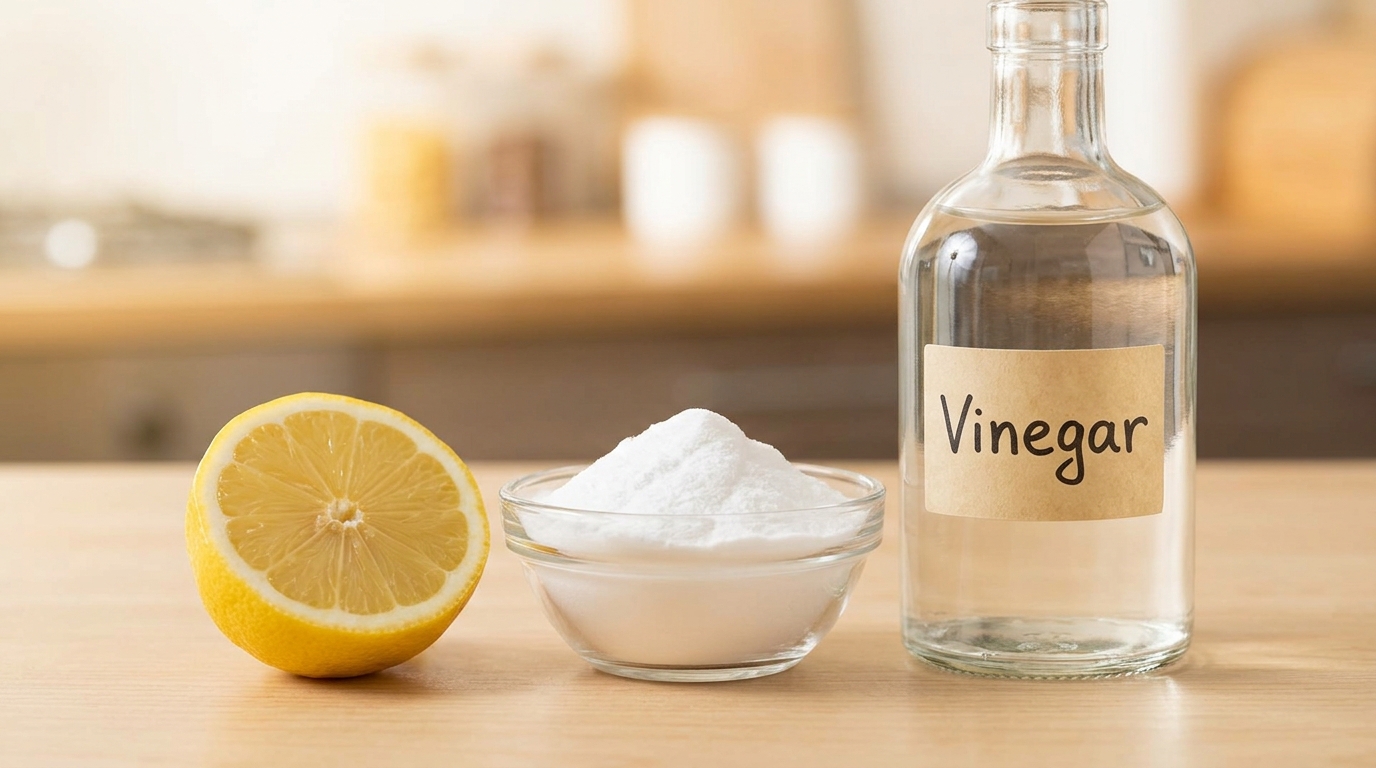
Many common household ingredients are highly effective cleaning agents. When used correctly, they can remove grease, eliminate odors, and restore shine throughout the kitchen.
White vinegar works well for dissolving grease and removing water spots. Baking soda provides gentle abrasion for cleaning sinks, stovetops, and stubborn stains without scratching most surfaces.
Fresh lemons naturally help dissolve grease while leaving behind a clean, fresh scent. Their mild acidity also makes them useful for removing certain mineral deposits.
Warm water remains one of the most underrated cleaning tools. Combined with microfiber cloths, it often removes light dirt and dust without requiring additional products.
Some of the most useful natural cleaning ingredients include:
- White vinegar
- Baking soda
- Fresh lemon juice
- Warm water
- Mild dish soap
- Microfiber cleaning cloths
Using these simple ingredients allows homeowners to maintain a clean kitchen while reducing dependence on stronger chemical cleaners.
Cleaning countertops using natural methods
Countertops receive constant daily use and require regular cleaning to remain sanitary and attractive. However, different countertop materials require different care.
Quartz countertops generally respond well to warm water, mild soap, and soft cloths. Abrasive powders and harsh chemicals are usually unnecessary for everyday cleaning.
Granite surfaces should be cleaned using gentle solutions because acidic products such as vinegar may affect the protective seal over time. Warm water and mild soap are often sufficient.
Laminate countertops are easy to maintain with simple soap and water. Excessive moisture should be avoided around seams to prevent swelling.
The table below summarizes recommended natural cleaning methods for common countertop materials.
| Countertop Material |
Recommended Natural Cleaner |
Avoid |
| Quartz |
Warm water and mild soap |
Abrasive cleaners |
| Granite |
Mild soap and microfiber cloth |
Vinegar on unsealed surfaces |
| Laminate |
Warm water and dish soap |
Excessive moisture |
| Solid Surface |
Mild soap and warm water |
Steel wool |
Following the appropriate cleaning method helps preserve countertop appearance and longevity.
Remove grease naturally from cooking areas
Grease accumulation is one of the most common kitchen cleaning challenges. Cooking oils gradually settle on cabinet doors, range hoods, backsplashes, and surrounding walls.
Warm water mixed with a small amount of dish soap often removes fresh grease effectively. Older buildup may require several gentle cleaning passes rather than aggressive scrubbing.
Baking soda paste can also help loosen stubborn grease on certain non painted surfaces. It should always be tested on a small hidden area before broader application.
Regular cleaning prevents grease from becoming difficult to remove. Small weekly maintenance sessions are generally more effective than waiting until heavy buildup develops.
Cabinets House recommends addressing grease early because prolonged accumulation can gradually affect cabinet finishes and reduce their original appearance.
Keep your sink naturally fresh and odor free
Kitchen sinks collect food particles, grease, soap residue, and moisture throughout the day. Without regular cleaning, unpleasant odors can begin to develop.
Baking soda sprinkled into the sink followed by gentle scrubbing with a soft sponge helps remove stains while neutralizing odors.
Fresh lemon halves can be rubbed directly onto stainless steel sinks to restore shine while providing a pleasant natural fragrance.
The drain also benefits from periodic maintenance. A combination of baking soda followed by hot water can help reduce odor buildup caused by food residue.
Simple sink maintenance contributes significantly to overall kitchen cleanliness.
Natural ways to eliminate kitchen odors
Persistent kitchen odors often originate from garbage containers, drains, refrigerators, or food preparation areas. Rather than masking these smells with artificial fragrances, natural odor control focuses on removing their source.
Regularly emptying garbage containers and cleaning their interiors helps prevent lingering odors. Refrigerators should also be inspected frequently for expired food.
Fresh lemons, coffee grounds, and baking soda all help absorb or neutralize unpleasant smells naturally.
Opening windows whenever possible also improves air circulation and reduces cooking odors throughout the home.
Effective odor control strategies include:
- Place baking soda inside the refrigerator
- Clean garbage bins weekly
- Rinse food waste immediately
- Ventilate the kitchen during cooking
- Clean sink drains regularly
These habits create a fresher kitchen without relying on strong artificial air fresheners.
Daily cleaning habits that prevent major messes
The easiest kitchen to clean is one that never becomes excessively dirty. Small daily habits reduce the need for time consuming deep cleaning later.
Wiping countertops after meal preparation prevents food residue from hardening. Cleaning spills immediately also protects cabinet finishes and flooring.
Loading the dishwasher promptly and avoiding overnight dirty dishes helps maintain a cleaner overall environment.
Simple daily maintenance keeps the kitchen organized while protecting long term investments such as cabinetry and countertops.
Protecting kitchen cabinets for long term beauty
Cabinets often represent the largest investment in a kitchen renovation, making proper maintenance especially important.
Avoid excessive moisture during cleaning and never allow water to pool around cabinet joints or edges. Harsh abrasive pads should also be avoided because they may damage painted or stained finishes.
Periodic inspection helps identify small issues before they become major repairs. Loose hinges, minor scratches, and finish wear can often be addressed early with minimal effort.
Forevermark Cabinets are designed for long lasting performance, but consistent care helps maintain their original appearance for many years.
Why Cabinets House recommends gentle maintenance
Beautiful kitchens are built to last, but long term appearance depends on proper care. Choosing safe cleaning methods helps preserve cabinet finishes, protect countertops, and reduce unnecessary wear.
Cabinets House encourages homeowners to develop simple maintenance routines rather than relying on aggressive deep cleaning. Consistent care helps kitchens remain attractive while protecting one of the home’s most valuable investments.
Whether maintaining newly installed cabinetry or caring for an older kitchen, gentle cleaning practices contribute to better long term performance and appearance.
Conclusion
Kitchen cleaning: natural ways of cleaning your kitchen demonstrates that maintaining a clean, healthy kitchen does not require harsh chemicals or expensive specialty products. With simple ingredients such as warm water, mild soap, baking soda, and lemons, homeowners can remove grease, eliminate odors, and protect valuable kitchen surfaces naturally.
Regular maintenance, combined with thoughtful cleaning habits, helps preserve cabinetry, countertops, appliances, and sinks while creating a healthier environment for everyday living.
For homeowners across the United States, adopting natural kitchen cleaning methods offers long term benefits for both the home and the family. With quality cabinetry from Cabinets House and the lasting craftsmanship of Forevermark Cabinets, proper maintenance ensures that a beautiful kitchen continues looking its best for many years.

 Single Door Wall Cabinet AX-W1530 Forevermark Xterra Blue Shaker
 Wall Glass Door with No Mullion and with Clear Glass TW-W1542GD Forevermark Uptown White Shaker
 Sink Base & Starter Set PW-SB42 Forevermark Petit White