Popular Kitchen Cabinets
Discover Forevermark RTA Kitchen Cabinets

Wholesale Kitchen Cabinets for Contractors, Builders & Dealers are essential for construction professionals who need dependable cabinetry, competitive pricing, consistent product quality, and efficient project coordination. Whether supplying cabinets for a residential renovation, managing a multi-unit development, or stocking a kitchen showroom, selecting the right wholesale cabinet supplier can influence project profitability, installation efficiency, and customer satisfaction.
For contractors, builders, and cabinet dealers, purchasing kitchen cabinets involves more than choosing attractive door styles. Product availability, construction specifications, cabinet dimensions, lead times, and replacement-part support all contribute to successful project delivery. A supplier offering competitive prices without dependable fulfillment may ultimately create additional expenses through delays and rework.
The wholesale cabinetry market includes ready-to-assemble (RTA) cabinets, pre-assembled cabinets, shaker collections, contemporary finishes, and specialty storage configurations. Each option serves different project requirements, making it important to evaluate both immediate purchasing costs and long-term operational value.
At Cabinets House, wholesale kitchen cabinet sourcing is approached with attention to the needs of professional buyers. Understanding how cabinetry selection affects estimating, procurement, installation, and repeat business can help contractors, builders, and dealers make more informed purchasing decisions.
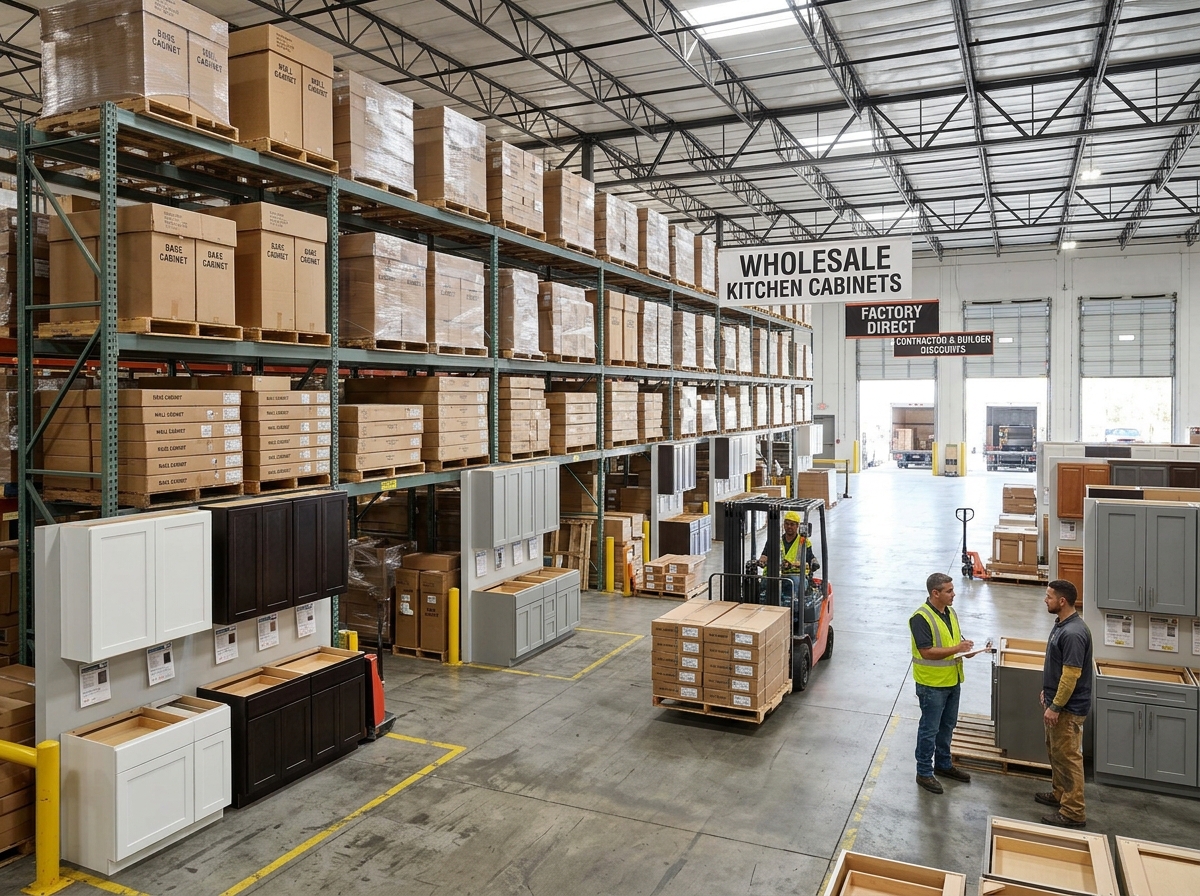
Wholesale kitchen cabinets help construction professionals manage material costs while maintaining consistent design and construction standards across projects. Purchasing cabinetry through a wholesale-oriented supplier can simplify product selection and support more predictable project planning.
For remodeling contractors, cabinetry often represents a substantial portion of the kitchen renovation budget. Access to competitively priced cabinet collections can create flexibility when preparing estimates and developing proposals for homeowners.
Builders managing multiple homes may prioritize standardized cabinet dimensions, repeatable layouts, and consistent finishes. These characteristics can reduce purchasing complexity and help installation teams work more efficiently across similar projects.
Cabinet dealers and showroom operators have additional requirements. They need products that appeal to different customers, support profitable resale, and provide enough design flexibility to accommodate varying kitchen layouts. A dependable wholesale supply relationship can become an important part of their business operations.
The best wholesale cabinet supplier is not necessarily the company advertising the lowest price. Professional buyers should evaluate the complete purchasing experience, including product quality, communication, fulfillment, and post-purchase support.
Cabinet construction specifications should be among the first considerations. Buyers need clear information about cabinet box materials, door construction, drawer systems, hinges, finishes, and available accessories. These details affect both installation requirements and customer expectations.
Inventory visibility and lead-time accuracy are equally important. Contractors frequently coordinate cabinet delivery with countertop fabrication, plumbing, electrical work, and flooring installation. Unexpected delays can disrupt multiple trades and increase labor costs.
A professional supplier should also provide clear ordering procedures, product identification, and policies for damaged or missing components. These operational details can be particularly valuable for buyers placing recurring or multi-project orders.
Ready-to-assemble kitchen cabinets are popular among professional buyers because they are shipped in components and assembled before installation. Their packaging can offer logistical advantages, particularly when transporting or storing multiple cabinet units.
For contractors with experienced installation teams, RTA cabinetry may provide opportunities to manage material costs while maintaining control over assembly. Standardized cabinet configurations can also support repeatable workflows.
However, assembly requires time, appropriate tools, and careful quality control. Poor assembly can affect cabinet alignment, stability, and installation efficiency. Contractors should include assembly labor when calculating total project costs.
RTA cabinetry can be particularly suitable for renovation projects, rental properties, and developments where standardized layouts are common. The correct choice depends on project volume, labor availability, transportation requirements, and product construction.
Pre-assembled cabinets arrive with the main cabinet boxes already assembled, potentially reducing on-site preparation time. This can be beneficial for contractors working under tight installation schedules.
RTA cabinets may require additional assembly labor but can offer advantages in packaging efficiency and storage. Neither option is universally more economical because the total cost depends on transportation, labor rates, project size, and supplier pricing.
| Comparison | RTA Kitchen Cabinets | Pre-Assembled Cabinets |
|---|---|---|
| Shipping Configuration | Flat-packed components | Assembled cabinet boxes |
| Assembly Labor | Required | Generally reduced |
| Storage Space | Often more compact | Typically requires more space |
| Installation Preparation | Additional assembly steps | Faster initial setup |
| Transportation | Potential packaging advantages | Larger shipping volume |
| Best Application | Cost-conscious and repeatable projects | Time-sensitive installations |
Professional buyers should compare delivered and installed costs rather than relying exclusively on the purchase price per cabinet.

Cabinet style selection should reflect customer demand, architectural preferences, and the types of projects being completed. Versatile designs can help contractors and dealers serve different buyers without maintaining an unnecessarily complicated product assortment.
White shaker cabinets remain a practical choice for residential remodeling because they coordinate with numerous countertop materials, flooring finishes, and hardware styles. Their straightforward appearance works in traditional, transitional, and many contemporary kitchens.
Grey shaker cabinets provide an alternative for homeowners seeking a neutral appearance with slightly more visual contrast. Natural wood-inspired finishes can appeal to customers interested in warmer interiors.
Darker cabinet finishes may be useful for islands, accent sections, or larger kitchens. Dealers should consider maintaining a balanced assortment rather than relying heavily on a single design trend.
Forevermark Cabinets can be considered by contractors and dealers evaluating coordinated kitchen cabinet styles and configurations. The suitability of a collection depends on its construction specifications, available dimensions, finish options, and current supply conditions.
Shaker-inspired cabinetry can be especially useful for professional projects because its familiar appearance works with multiple design directions. This flexibility may simplify material selection when serving customers with different budgets and preferences.
However, professional buyers should verify the specific collection’s cabinet box construction, door materials, hardware, and accessory compatibility before including it in project specifications.
Current availability, wholesale eligibility, pricing, and fulfillment arrangements should also be confirmed with the supplier. These details can vary by product collection and purchasing circumstances.
Builders managing townhomes, apartment renovations, rental developments, or multiple residential properties often benefit from standardized cabinet specifications.
Using consistent cabinet widths, door styles, finishes, and hardware can simplify estimating and reduce the number of different products required. Standardization may also help installation teams develop more efficient workflows.
Accurate measurements and coordinated layouts are particularly important. Even small design inconsistencies between units can create purchasing complications and increase installation time.
Builders should establish a procurement schedule that accounts for cabinet availability, delivery, inspection, assembly, and installation. Planning these stages early helps reduce the risk of interruptions during construction.
A well-managed purchasing process focuses on total project efficiency rather than simply selecting the lowest-priced cabinetry.
Cabinet dealers need to balance product cost, selling price, operating expenses, and customer service requirements. Wholesale pricing can create opportunities for resale margins, but profitability depends on more than the initial discount.
Dealers should consider showroom expenses, design consultations, delivery coordination, damaged-product handling, and potential replacement components. These costs affect the actual margin earned on each sale.
A focused product assortment can help simplify operations. Offering versatile cabinet styles in commonly requested dimensions may reduce inventory complexity while supporting a broad range of kitchen designs.
Dealers can also create value through accurate design assistance, clear product information, and dependable order management. Customers purchasing cabinetry often need guidance with dimensions, finishes, storage configurations, and installation considerations.
Cabinet construction quality directly affects installation performance and customer satisfaction. Professional buyers should evaluate cabinet boxes, shelves, drawer systems, hinges, and finishes before selecting a product line.
Plywood, MDF, solid wood, and particleboard may all appear in cabinet construction, depending on the component and collection. The suitability of each material depends on manufacturing quality, intended application, and environmental conditions.
Drawer slides and hinges deserve particular attention because they experience repeated use. Properly selected hardware can improve operation and reduce adjustment requirements.
Contractors should also verify assembly methods, cabinet dimensions, and installation requirements. Consistent construction can help reduce installation complications and improve finished results.
Bulk purchasing requires accurate documentation and coordination. A single ordering mistake can affect several kitchens, particularly when multiple units share similar layouts.
Before submitting an order, contractors should confirm cabinet dimensions, quantities, door swing requirements, finished end panels, fillers, moldings, toe kicks, and accessories.
A structured purchasing checklist can include:
Orders should be reviewed against the final drawings before approval. This process can help prevent missing components and reduce unnecessary project delays.
One common mistake is evaluating cabinetry solely by unit price. Low initial pricing may offer limited value if products require extensive rework, arrive late, or do not meet project specifications.
Another mistake is failing to verify inventory before committing to a construction schedule. A cabinet style may be suitable for the design but unavailable when the project requires installation.
Inaccurate measurements can also create significant expenses. Professional buyers should confirm field dimensions and appliance specifications rather than relying exclusively on preliminary plans.
Finally, contractors and dealers should avoid assuming that every collection from the same manufacturer has identical construction or warranty conditions. Product-level verification remains essential.
Cabinets House provides a starting point for contractors, builders, and dealers researching kitchen cabinetry for residential construction and remodeling projects.
Professional buyers can evaluate cabinet styles, configurations, materials, and design options while considering the practical requirements of their projects.
When exploring Forevermark Cabinets, buyers should confirm the available collections, product specifications, ordering conditions, and suitability for the intended application.
Wholesale purchasing arrangements, volume pricing, account eligibility, and fulfillment terms should be discussed directly before project commitments are made.
The objective is to select cabinetry that supports competitive project costs while meeting expectations for appearance, functionality, and installation quality.
Contractors can explore cabinet wholesalers, distributors, manufacturers, and retailers offering professional purchasing arrangements. Buyers should compare product specifications, pricing eligibility, inventory, shipping terms, and customer support before selecting a supplier.
Wholesale arrangements may offer pricing advantages, particularly for qualifying professional or volume purchases. However, actual savings depend on order size, product selection, shipping, assembly, and installation costs.
Builders often prioritize durable construction, standardized dimensions, versatile finishes, predictable availability, and efficient installation. The best choice depends on the development type, project budget, and customer requirements.
Bulk purchasing opportunities depend on the supplier’s distribution arrangements, account requirements, inventory, and commercial terms. Dealers should verify eligibility and current availability before placing orders.
Yes. RTA cabinets can be suitable for professional installations when the products meet project specifications and are assembled correctly. Contractors should include assembly labor and quality control in their project planning.
A detailed quote should identify cabinet models, quantities, finishes, accessories, pricing, delivery terms, applicable taxes, and any additional services. Buyers should also clarify policies for shortages, damaged products, and order changes.
Wholesale Kitchen Cabinets for Contractors, Builders & Dealers should provide more than an attractive purchase price. The right cabinetry supports efficient installation, consistent project quality, customer satisfaction, and predictable purchasing processes.
Contractors benefit from accurate specifications and dependable scheduling. Builders need repeatable cabinet configurations that support multi-unit construction. Dealers require versatile product collections and purchasing arrangements that allow them to serve customers profitably.
RTA cabinets, pre-assembled options, shaker styles, and coordinated finishes can all serve different professional requirements. Evaluating total project costs, material quality, and supply conditions helps buyers identify the most practical solutions.
By exploring available cabinetry through Cabinets House and verifying current options for Forevermark Cabinets, professional buyers can make informed sourcing decisions that support successful remodeling projects and long-term business relationships.

Cabinetshouse.com offers exclusive and huge discounts for all professionals including builders, contractors, dealers, and designers. Also if you have several projects and need volume discounts then apply our professional buyer program to give bulk orders.
First of all, please create a general account and after that fill-out the below form. For creating a general account, please click REGISTER ACCOUNT link. After that, for applying PROFESSIONAL ACCOUNT, please fill out the form at below to get our exclusive professional discounts.
If you would like to speak any support assistance then you can call our toll-free number (833) 422-5587 or drop a message to [email protected]
No account yet?
Create an Account